Thermofluids
Aim
Two thermofluids challenges: an individually designed and CFD-analysed electric supercar body optimised for aerodynamic efficiency, and a liquid-cooled battery pack cooling plate balancing pressure loss against thermal uniformity.
Solution
IONEX, the supercar concept, achieved a drag coefficient of 0.2965 through iterative CFD-informed design. The battery cooling plate with a parallel-serpentine hybrid channel layout balanced convective heat transfer against pumping power under a fixed 12 g/s inlet flow rate.
Click to view PDF Portfolios
Challenge 1 — IONEX: Electric Supercar Aerodynamics
An individual project designing and CFD-analysing an electric supercar body, benchmarked against real EV hypercars, targeting low drag with controlled downforce for sustained high-speed driving.
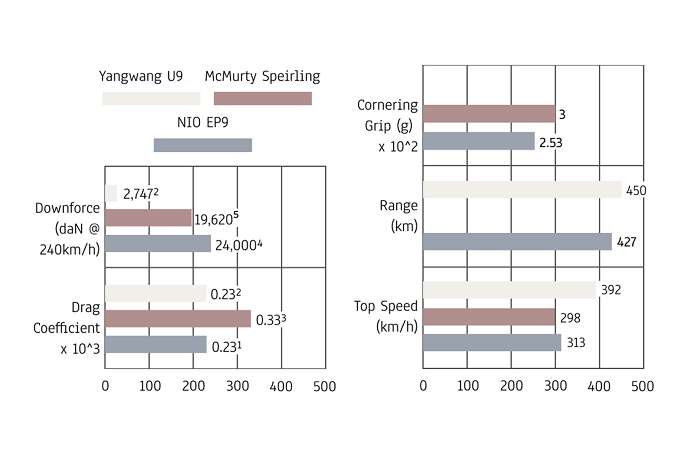
Design & Benchmarking
Defined the electric-supercar archetype and benchmarked it against the McMurtry Spéirling, Yangwang U9 and NIO EP9 to justify a design targeting sustained high-speed stability rather than extreme track-only downforce.
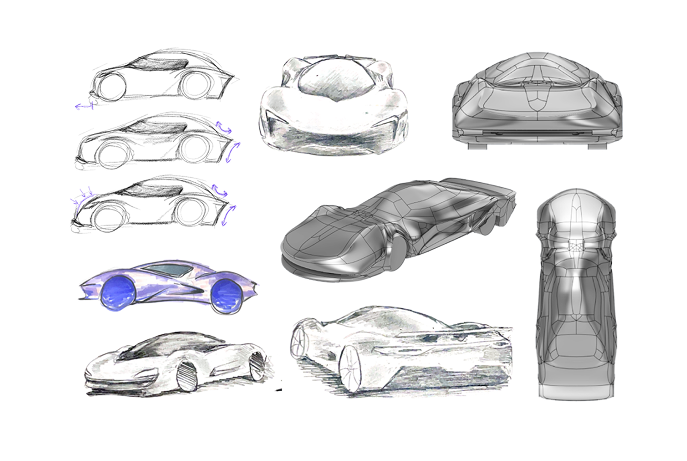
Design Development
Iterated the body through hand sketches and case studies of the McLaren 720S, refining nose, roof and rear geometry before modelling a lo-fi CAD form for CFD.
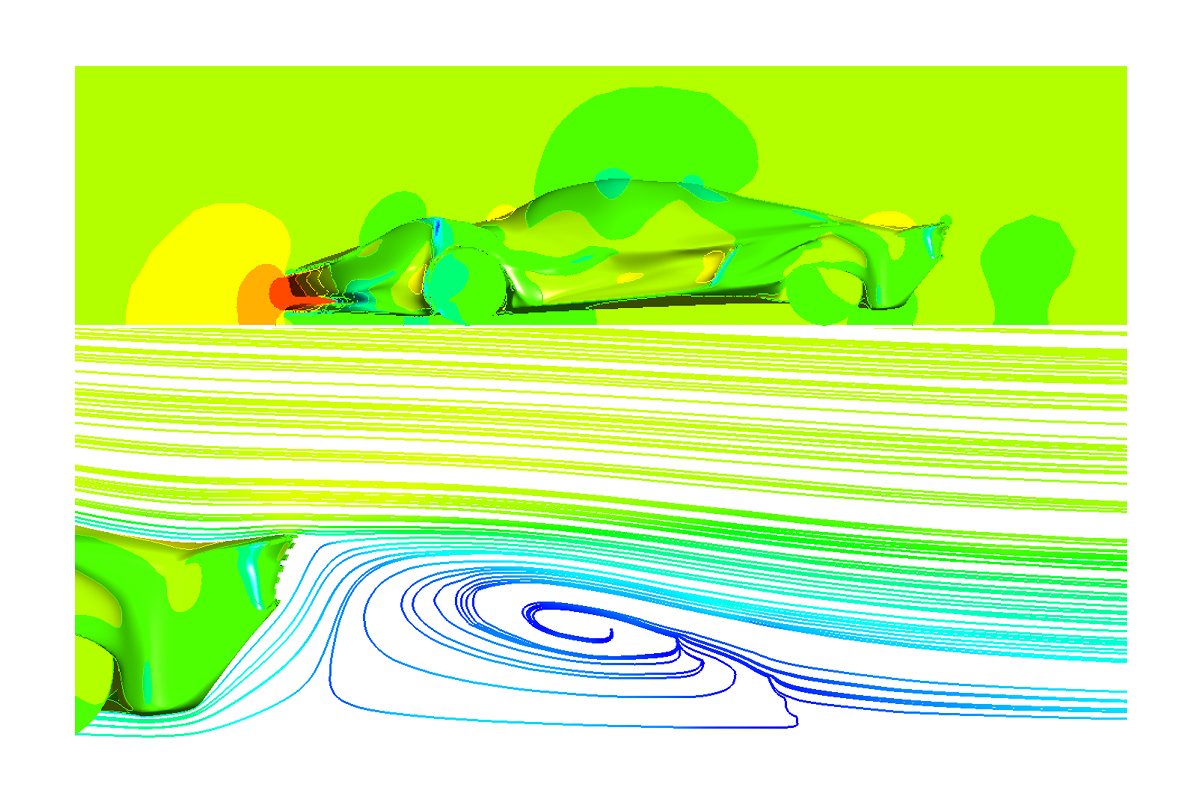
CFD Analysis & Results
Ran a 1M+ cell CFD simulation with a k-epsilon turbulence model, achieving Cd = 0.2965 and Cl = -0.0816, then proposed wake and underbody refinements for further drag reduction.
Challenge 2 — Battery Pack Cooling Plate
Designed a liquid-cooled cooling plate for a battery pack under a fixed 12 g/s inlet flow rate, balancing convective heat transfer against pumping power and temperature uniformity.
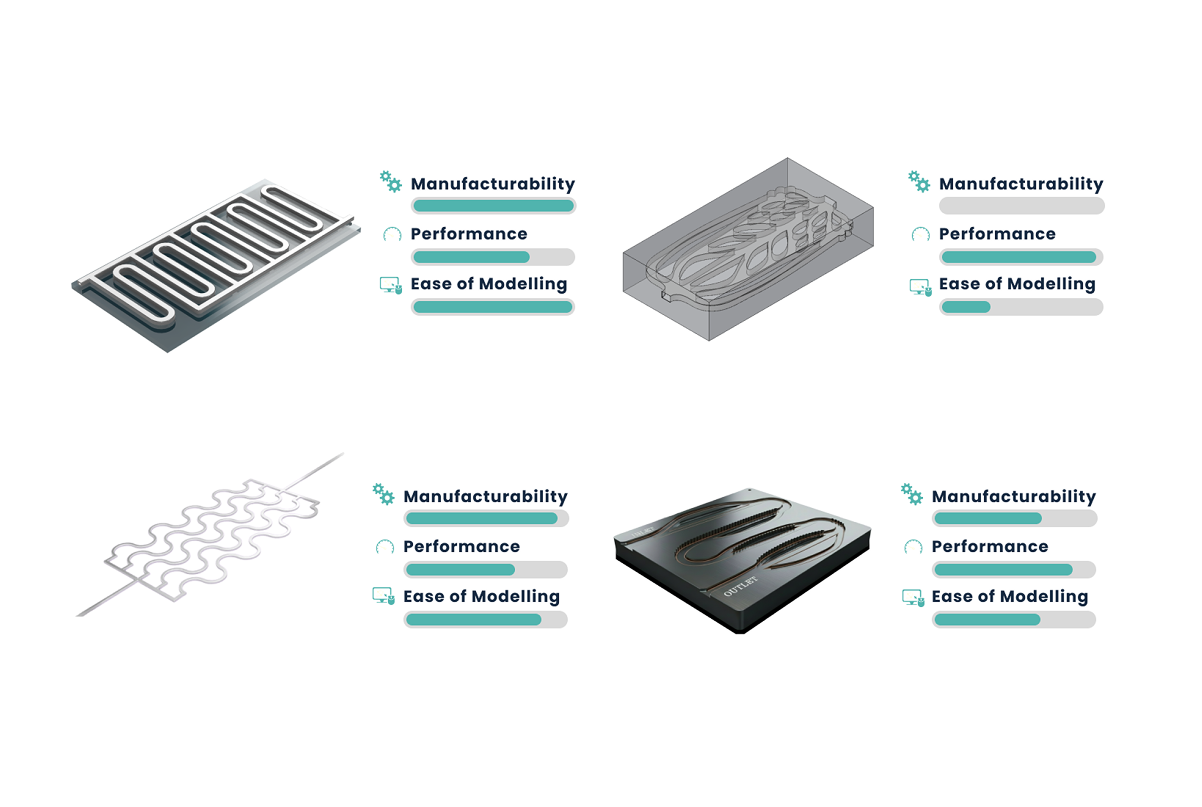
Benchmarking Architectures
Compared serpentine, parallel and microchannel cooling plate designs against pressure drop, contact area and manufacturability, identifying parallel architectures as the most balanced starting point.
Design Iteration
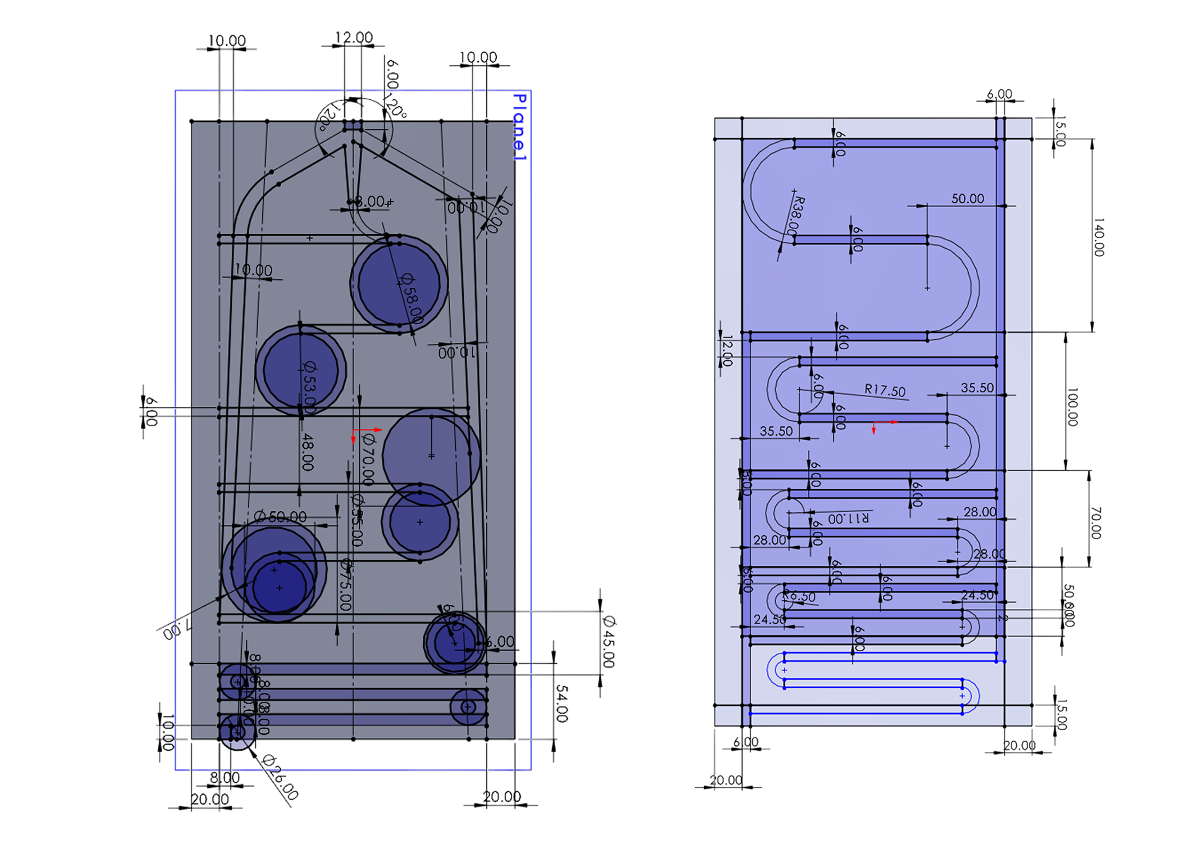
Iterated from a single serpentine channel through an aggressive serpentine and parallel straight design, evaluating each against pressure drop, heat transfer and temperature uniformity.
Final Design
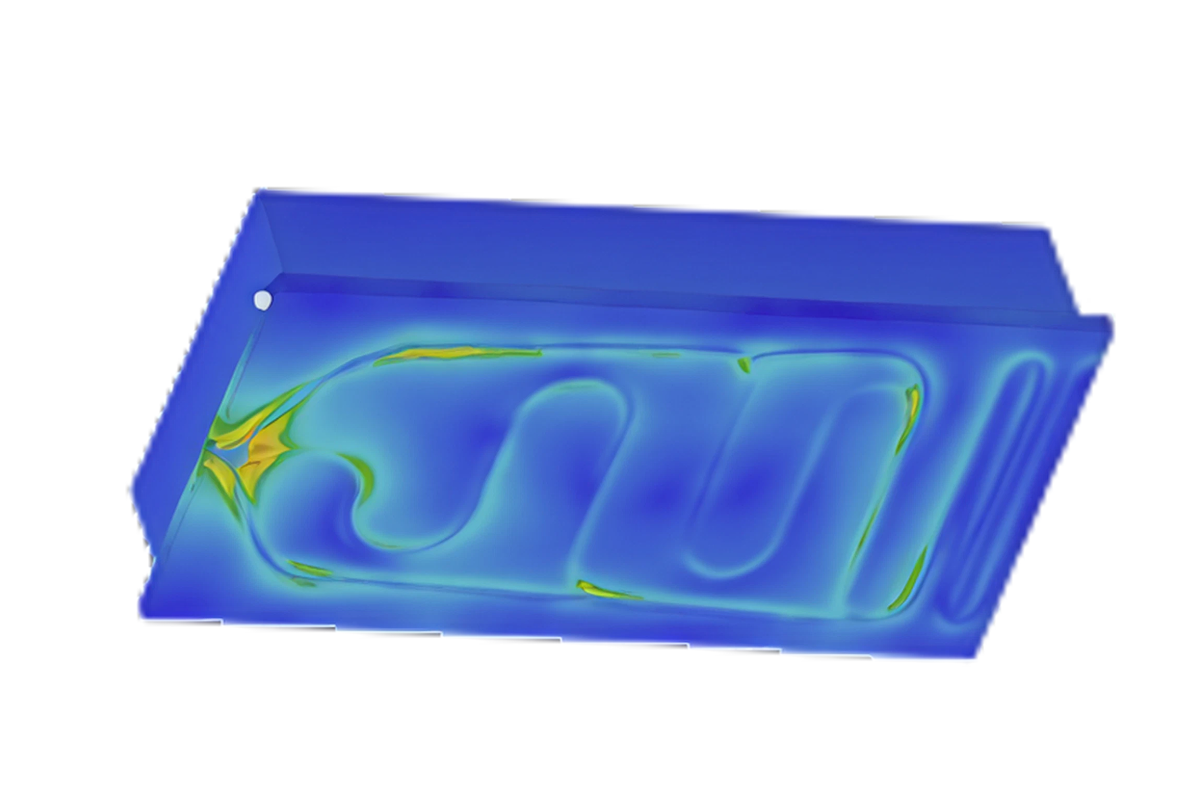
Converged on a parallel-serpentine hybrid with a 3.43 mm hydraulic diameter, sized for CNC-machined aluminium manufacture, balancing temperature uniformity against pumping power.