Running Blade FEA
Aim
Finite element analysis was used to evaluate a prosthetic running blade against fatigue, modal and mass requirements, comparing a baseline geometry against a redesigned profile, and carbon-fibre composite against aluminium alloy.
Solution
The modified CFRP blade cut peak stress by roughly 44% and deformation by roughly 80% versus the baseline, raised the first natural frequency from 29.24 Hz to 58.90 Hz and reduced mass by 27%, while maintaining a fatigue life beyond 10⁹ cycles.
Click to view PDF Report
The Process
Baseline analysis, geometry redesign, material comparison and mesh validation were carried out in sequence, each stage checked against the fatigue, frequency and mass requirements.
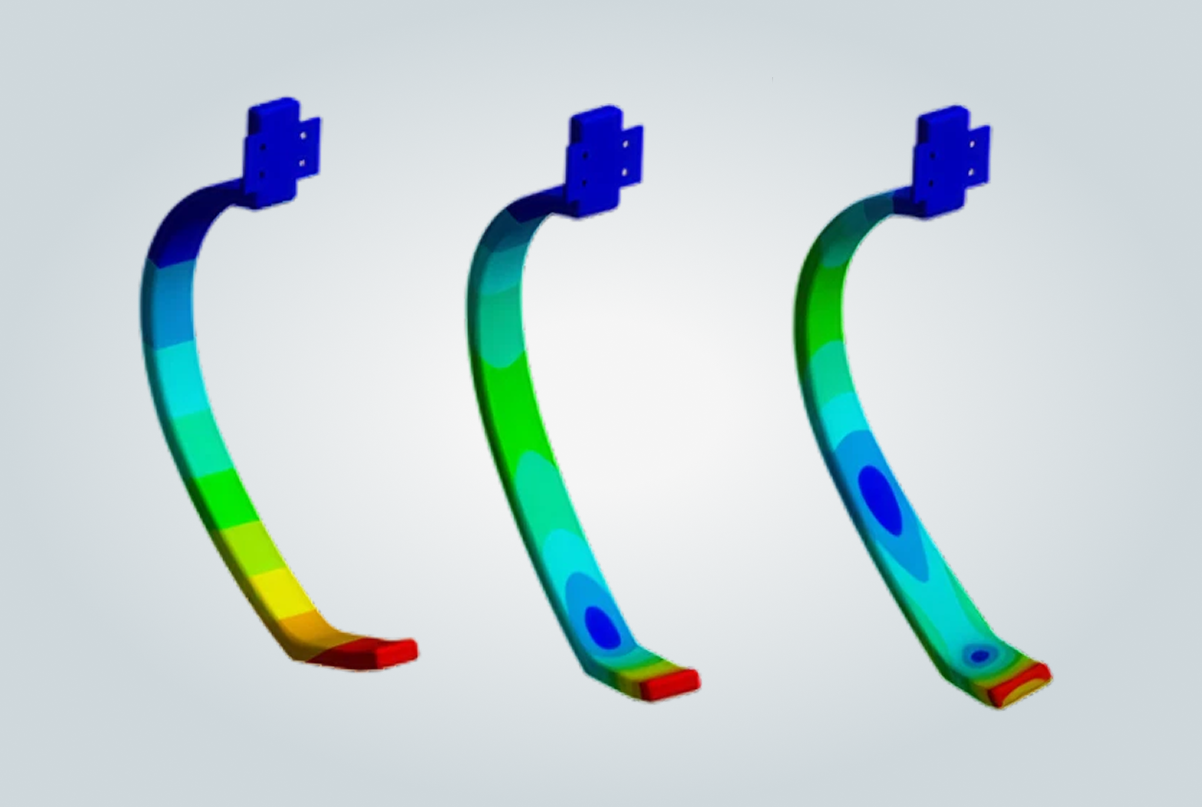
Baseline Analysis
The baseline CFRP geometry was assessed under static, fatigue and modal loading. It met the fatigue requirement but deformed 115 mm under load, with a first natural frequency of only 29.24 Hz — well short of the 50 Hz target.
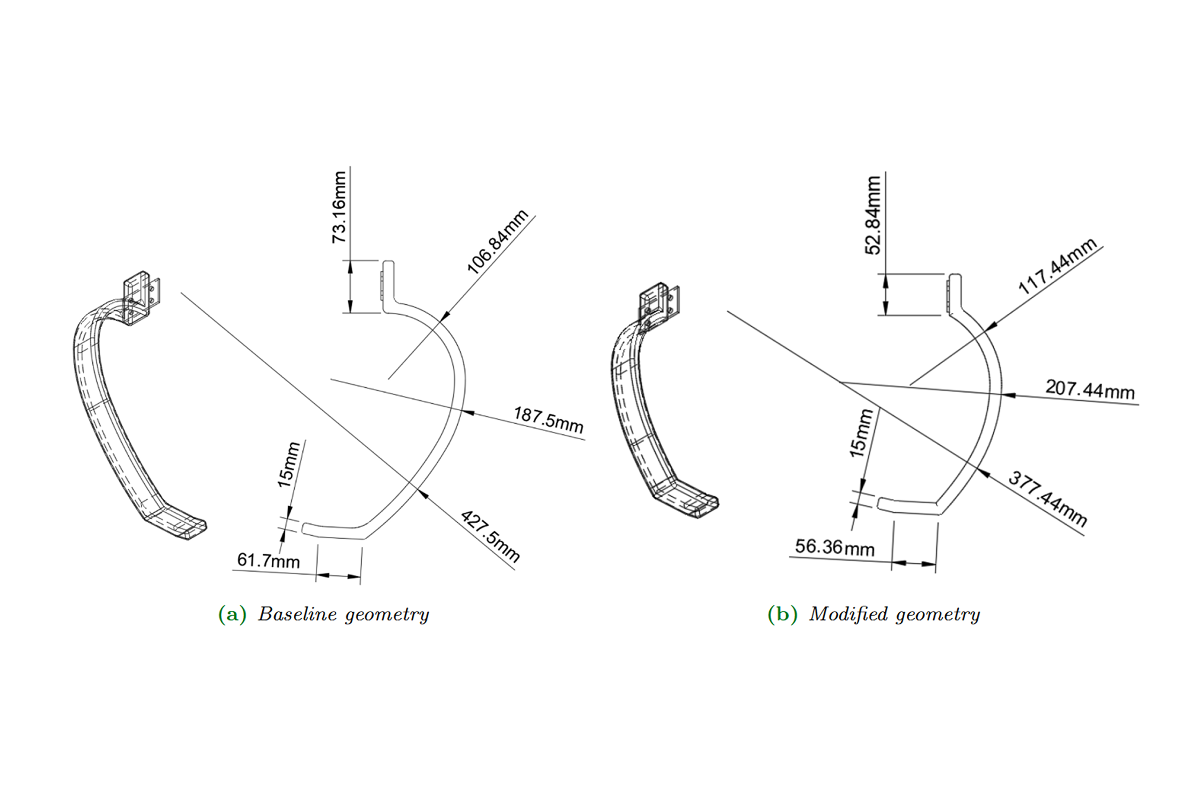
Design Iteration
Increasing curvature and shortening the distal region raised bending stiffness, cutting peak stress by roughly 44% and deformation by roughly 80%, and lifting the first natural frequency to 58.90 Hz.
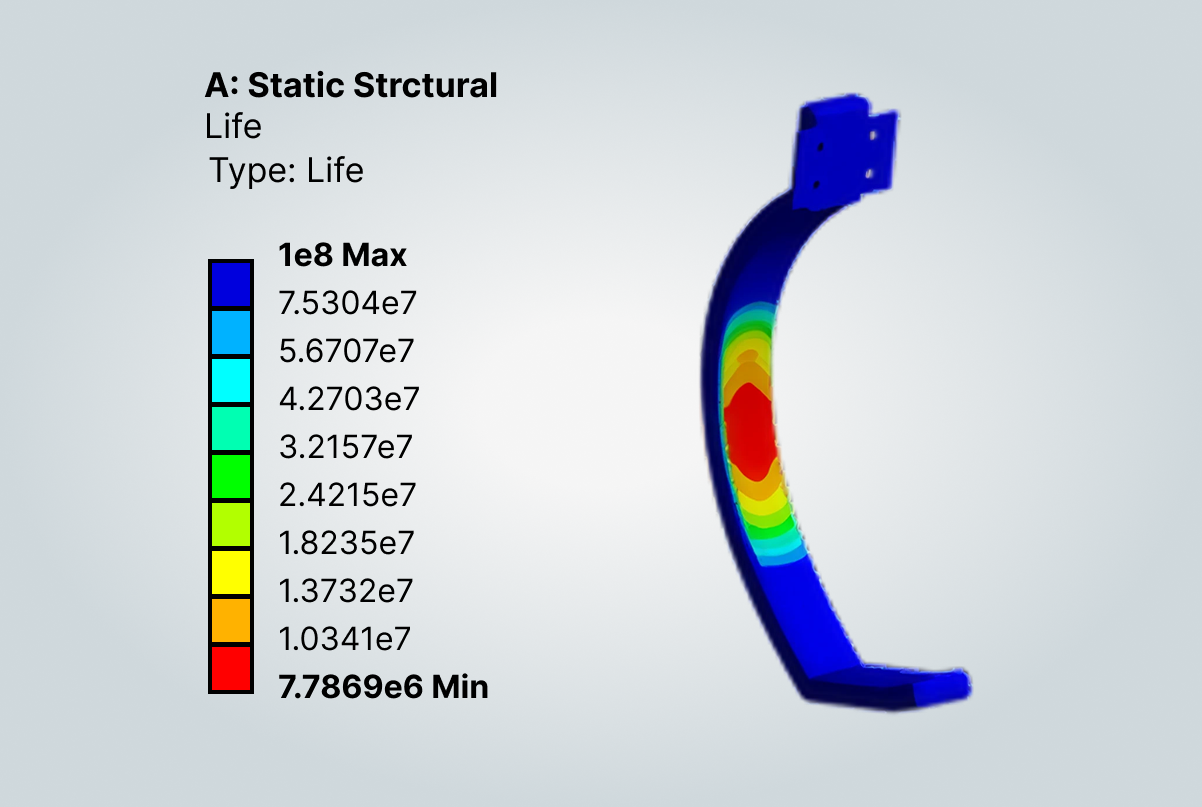
Material Comparison
The modified geometry was re-run in aluminium 2014-T4, reaching the highest frequency of all cases (99.90 Hz) and a fatigue life beyond 10⁶ cycles — but at nearly double the mass of the CFRP equivalent.
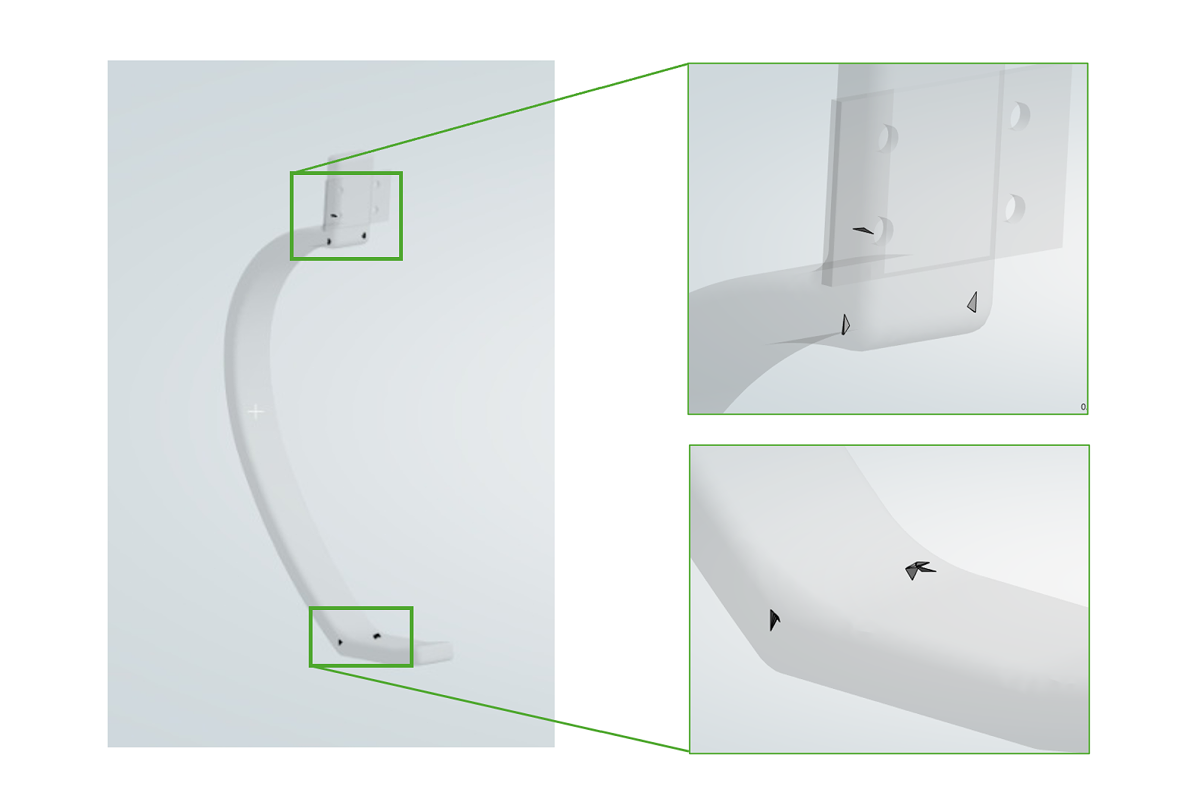
Mesh Convergence & Validation
Global and local mesh refinement confirmed convergence to within about 1%, and sensitivity checks — reversed friction, large-deflection — verified the linear baseline model gave a stable, physically consistent solution.